

Fast-moving wildfires in Oklahoma lead to evacuation calls for thousands of residents as unseasonably warm temperatures, dry conditions, and powerful winds combine to create a dangerous fire emergency across the region.
Authorities in the small city of Woodward have urged nearly one-third of the community’s population to temporarily leave their homes as flames advance toward residential areas. The situation has escalated rapidly, with local and state officials closely monitoring the threat.
Table of Contents
ToggleEvacuation Advisory in Woodward


Matt Lehenbauer, director of emergency management for Woodward, confirmed that approximately 4,000 residents — out of the city’s nearly 12,000 inhabitants — have been advised to evacuate. The evacuation order remains voluntary, as Oklahoma law does not permit mandatory evacuations.
Officials described the advancing blaze as nearing a “worst-case scenario.” While the fire has not yet entered the city’s most densely populated neighborhoods, shifting winds and dry vegetation continue to pose a serious threat.
Woodward is located about 140 miles northwest of Oklahoma City, placing it squarely in an area experiencing extreme fire weather conditions.
Massive Fire in Beaver County
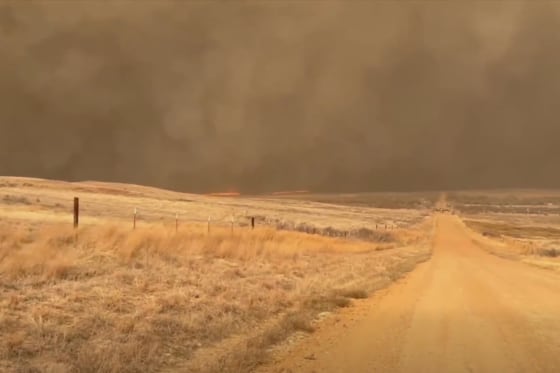


Meanwhile, in Beaver County, a separate wildfire has already scorched an estimated 15,000 acres near the base of the Oklahoma Panhandle. Dramatic footage released by Oklahoma Forestry Services shows vast stretches of golden farmland engulfed in thick smoke and towering flames that move like an approaching thunderstorm.
Governor Kevin Stitt stated that winds in the region are gusting above 65 miles per hour, significantly complicating firefighting efforts. He confirmed he is receiving updates from the State Emergency Operations Center, which is tracking multiple large fires, including another in Texas County.
As the Beaver County fire continued its advance, it crossed into Kansas, prompting emergency response efforts there. Fire crews are concentrating their resources near the city of Englewood, according to the Kansas Forest Service.
Kansas Declares Emergency Amid Fire Threat
Kansas Governor Laura Kelly had already issued an emergency proclamation warning residents of dangerous fire conditions expected to persist through Thursday.

The state’s emergency operations center activated additional personnel from the State Fire Marshal’s Office, the Kansas Forest Service, the Kansas Highway Patrol, and the Department of Transportation. Dust storms driven by high winds forced closures along portions of Interstate 70 and U.S. 50, creating hazardous travel conditions.
Extreme Weather Fuels the Crisis
The fires have spread rapidly across western and northwestern Oklahoma, where temperatures are running significantly above seasonal averages. Forecasters predicted daytime highs reaching up to 25 degrees above normal, with some areas near the state’s western edge approaching 85 degrees.
The National Weather Service office in Norman warned that critical fire weather conditions may linger until at least Friday. However, the Oklahoma Agriculture Department indicated that a shift in wind direction from southwest to northwest could usher in cooler air later in the week, potentially reducing fire intensity.
Fire Danger Expands Across Central Plains
According to the National Interagency Fire Center, new wildfires have also ignited in Texas, New Mexico, and Missouri as warm, dry air settled over the Central Plains following a weekend storm front.
On Tuesday alone, more than 21 million Americans were placed under fire weather watches — alerts issued when sustained high winds and low humidity create conditions ripe for rapid fire growth. An additional 11 million people were under red flag warnings, signaling imminent and critical fire danger.
Damage and Injuries Still Unknown
As of now, officials have not confirmed any injuries or structural damage linked to the ongoing fires. Emergency crews remain focused on containing the blazes and preventing further spread into residential areas.
With powerful winds, parched land, and unusually warm temperatures converging, Fast-moving wildfires in Oklahoma lead to evacuation calls for thousands of residents, underscoring the growing wildfire risks facing communities across the Central Plains.
Authorities continue urging residents in affected areas to remain alert, follow evacuation recommendations, and monitor local emergency updates as the situation develops.